

Application of barite in oil and gas + How to use barite as a drilling mud weighting agent

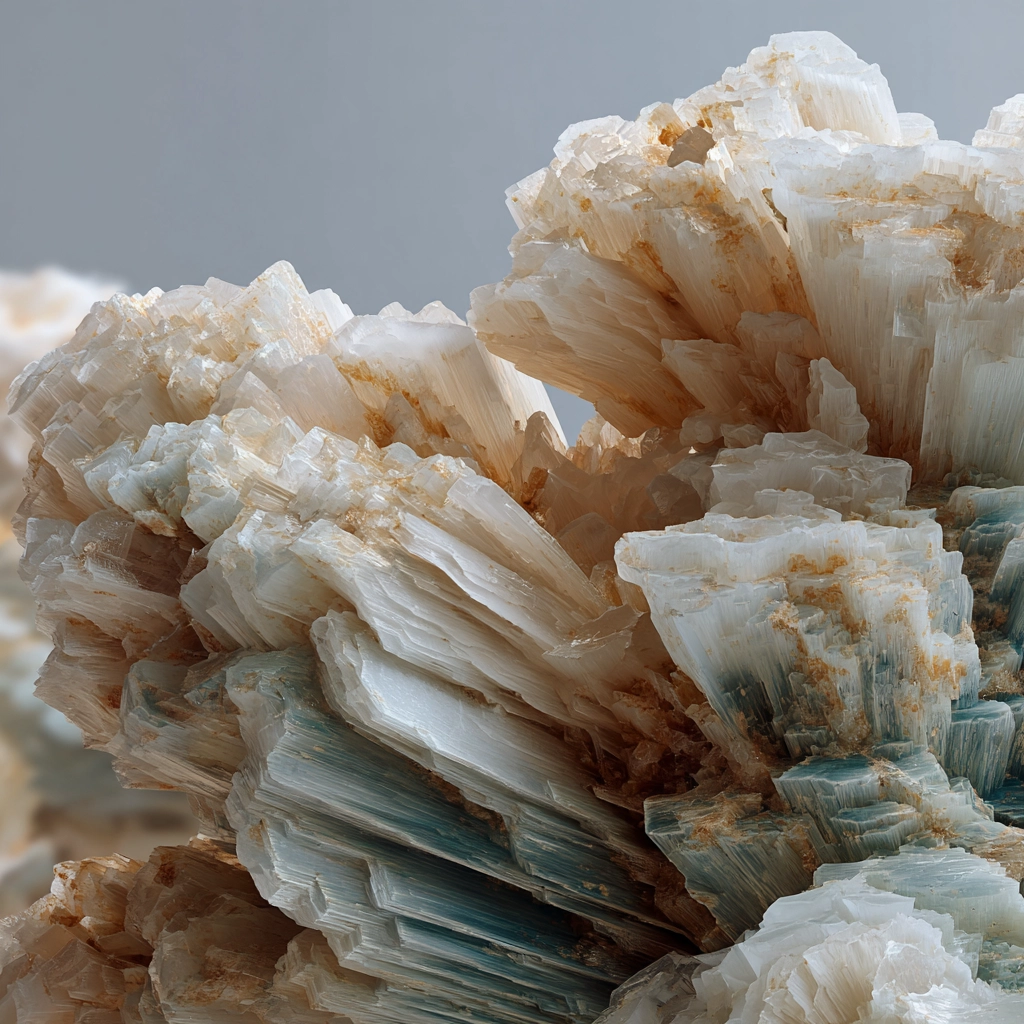
Drilling oil and gas wells is one of the most complex and challenging industrial processes, confronting engineers with a set of technical and economic problems. Among the most important concerns are formation pressure control, prevention of unwanted fluid influx, wellbore stability, and reduction of damage to drilling equipment. Failure to manage these factors can lead to increased costs, operational shutdowns, and even serious safety hazards.
In such conditions, the use of special mineral materials with unique physical and chemical properties, especially barite (BaSO₄), as a weighting agent for drilling mud, provides a practical and effective solution. Barite, with its high density, chemical resistance, and uniform distribution in drilling fluid, enables mud pressure control, maintains wellbore stability, and increases drilling operation efficiency.
In the following, by studying this article from the website of Raees Industrial Group, we will examine the application of barite in the oil and gas industry and its use as a drilling mud weighting agent, so that engineers and enthusiasts of this industry gain a deep understanding of this key mineral material.
What is barite?
Barite (BaSO₄) is a mineral from the sulfate group that, due to its very high density and chemical stability, has extensive applications in various industries. This material is found in the form of short crystals or dense masses and usually has a white to light gray color. Barite is used in the oil and gas industry as a weighting agent for drilling mud to balance mud pressure with formation pressure and prevent wellbore collapse. Additionally, this material is used in medical, paint, and plastic industries as a filler and density enhancer. The unique physical and chemical properties of barite, including insolubility in water, resistance to acids, and uniform particle distribution, make it ideal for industrial applications. Generally, barite is recognized as a key and versatile mineral material that plays a fundamental role in improving the efficiency of industrial processes.
What are the applications of barite in the oil and gas industry?
Barite, as a strategic mineral material with high density and specific chemical stability, plays an important role in the oil and gas industry.
In the following, we will examine the most important applications of barite in drilling, pressure control, wellbore stability, and other vital roles in oil and gas operations.
Weighting drilling mud
One of the primary applications of barite in the oil and gas industry is its use as a weighting agent for drilling mud. Drilling mud is used to transport cuttings to the surface, cool the drill bit, and lubricate the pipes, but its most important role is well pressure control. Barite, with its high density, increases the weight of the mud and balances its hydrostatic pressure with formation pressure. This balance prevents formation fluid influx into the well and avoids unwanted blowouts. Additionally, the uniform distribution of barite in the drilling fluid maintains the rheological properties of the mud and prevents rapid settling; thus, barite plays a key role in drilling safety and efficiency.
Formation pressure control
One of the major challenges in drilling is managing formation pressure, which, if not controlled, can lead to blowouts, wellbore collapse, or uncontrolled fluid influx. Barite, by increasing the weight of drilling mud, helps create a precise balance between mud pressure and formation pressure. Drilling engineers can precisely control mud density by determining the appropriate particle size distribution, percentage, and distribution method of barite. This precise pressure control not only prevents unwanted incidents but also enables safe drilling in deep and high-pressure wells, where even minor pressure fluctuations can cause serious damage.
Wellbore stability
Barite plays an important role in maintaining wellbore stability. When drilling mud contacts the wellbore wall, barite particles create a thin protective layer that prevents soil, rock, and other materials from collapsing. This layer causes the wellbore wall to have greater resistance against mechanical pressures and geological changes. Additionally, barite, by absorbing water and maintaining mud viscosity, prevents swelling and cracking of clay soils and makes drilling conditions safer for the passage of drilling equipment. Therefore, barite not only increases mud weight but also acts as a mechanical and chemical shield for the wellbore wall.

Protection of drilling equipment
The use of barite in drilling mud reduces wear and damage to drilling equipment. Fine and uniform barite particles act as a lubricating coating on the drill bit and pipes, reducing friction between them and the hard formation. This increases the useful life of the drill bit and reduces the need for frequent repairs. Additionally, the uniform distribution of barite in the mud improves heat transfer efficiency and reduces internal friction, resulting in faster and safer drilling. In summary, barite not only optimizes drilling performance but also reduces operational and repair costs.
Reducing settling and maintaining mud properties
Settling of particles in drilling mud is a common problem that can reduce fluid efficiency and hinder proper cuttings transport to the surface. Barite, with its fine and uniform particles, maintains uniform distribution throughout the mud and prevents rapid settling. This property allows drilling engineers to stably maintain the rheological properties of the mud, including viscosity, shear strength, and particle transport capability. Maintaining these properties is vital for efficient cuttings transport, equipment lubrication, and well pressure control, and directly affects the success of drilling operations.
Use in special drilling conditions
In deep wells, high pressure, or complex formations, managing the weight and performance of drilling mud becomes much more important. Barite, due to its high density, chemical stability, and resistance to environmental reactions, is an ideal option for such conditions. Drilling engineers can optimize mud density according to well pressure and geological conditions by adjusting the particle size distribution, percentage, and distribution method of barite. This application increases safety, reduces blowout and wellbore collapse risks, and improves drilling operation efficiency, solidifying barite’s role as a strategic and vital material in modern oil and gas drilling.
How to use barite as a weighting agent
Barite, as the primary weighting agent for drilling mud, plays a vital role in well pressure control and wellbore stability. For optimal use, first the type, particle size distribution, and purity of barite must be specified. Typically, drilling barite has a minimum purity of 99% BaSO₄ and particle size between 2 to 75 microns to ensure uniform distribution in drilling mud.
After selecting the appropriate barite, the concentration and amount of barite are determined according to well depth, formation pressure, and geological conditions to achieve the desired mud density. Barite is slowly added to the mud using mechanical mixers to prevent clumping and rapid settling.
Additionally, after adding barite, the viscosity, density, and pH of the mud must be controlled to maintain its rheological properties and keep drilling mud performance optimal. Observing these points ensures that barite effectively controls formation pressure, increases wellbore stability, and prevents equipment damage.
Conclusion
By studying this article from the website of Raees Industrial Group, we realized that barite, with its unique properties including high density, chemical stability, and uniform particles, plays a vital role in the oil and gas industry. The use of barite as a drilling mud weighting agent controls formation pressure, stabilizes the wellbore, reduces equipment damage, and maintains the rheological properties of the mud. Additionally, correct selection of barite type, particle size distribution, and concentration, along with uniform distribution in the drilling fluid, guarantees optimal drilling operation performance.
Ultimately, it became clear that utilizing barite, in addition to increasing drilling safety and efficiency, also helps reduce costs and optimize industrial processes, highlighting the importance of this mineral material in the oil and gas industries.